📚 Free Guide
How to Grade Sports Cards
The honest guide to understanding card condition — from beginner to expert. Learn what the graders look for so YOU can grade like a pro.
The honest guide to understanding card condition — from beginner to expert. Learn what the graders look for so YOU can grade like a pro.
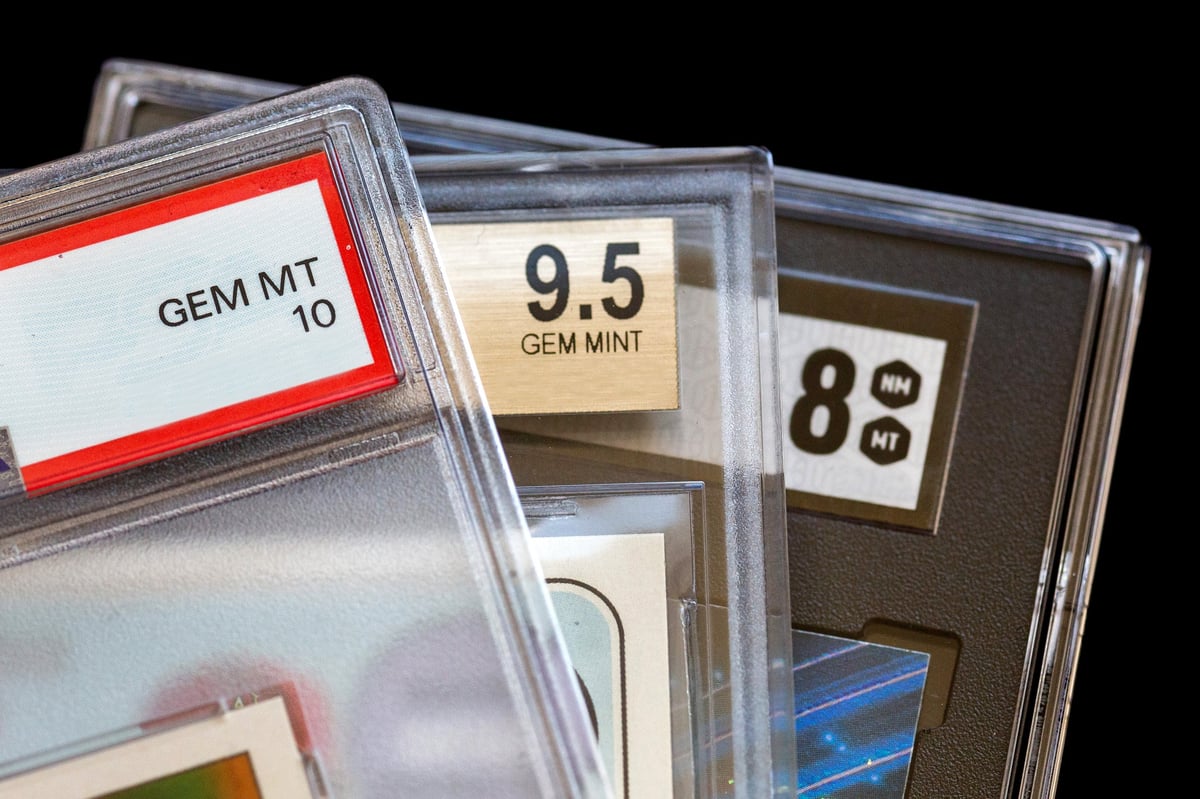
Grading is like a report card for your card. Experts look at your card under bright lights and magnification and give it a score from 1 to 10.
A 10 is perfect — like it just came out of the factory. A 1 has a lot of damage. Most cards fall somewhere in between.
A PSA 10 Michael Jordan rookie card might be worth $50,000. The same card in PSA 6 might be worth $5,000. Same card. Different score. Big difference.
Graded cards go into a hard plastic "slab" that never opens. It's sealed forever. Buyers know the grade is real because the card can't be swapped.
Auction houses, eBay buyers, and collectors worldwide trust graded cards. The grade is a universal language.
Here's what each number means. Think of it like school grades: A is great, D is poor.
Perfect. Like it was never touched. Impossible to find on vintage cards.
Near perfect. Tiny flaw only experts can spot. Very rare.
Almost perfect. Light wear only visible under magnification.
Excellent. May have slight surface scratches. Still looks great.
Great looking card with light wear. Still very collectible.
Nice card with visible wear. Great for collectors on a budget.
Noticeable wear but still presentable. Good for vintage builds.
Shows clear wear. Still recognizable and collectible.
Heavy wear but intact. Often the only grade available for rare cards.
Damaged but real. Shows significant wear or alterations.
You don't need a PSA 10 to have a valuable card. A PSA 8 Jordan rookie is still worth thousands. Many collectors specifically look for grades 6-8 because they're affordable AND authentic. Focus on finding cards in good condition — not perfect condition.
Three companies control the grading world. Think of them like the big three sports leagues — each has its own fans.
Professional Sports Authenticator
The gold standard. Most recognized, most trusted, and most expensive. If you have a valuable card, PSA is usually the move.
Beckett Graded Services
Known for their green label and detailed sub-grades. Popular with modern card collectors. Beckett also publishes price guides the whole hobby uses.
Certified Guaranty Company
Originally known for comics and currency, CGC has expanded into cards. Known for fast turnaround and strong customer service.
For vintage cards (1970s and earlier): Go with PSA —
it's what buyers expect.
For modern cards (1990s onwards): BGS or CGC are both
respected.
For Pokemon or TCG cards: CGC is gaining fast.
The honest truth? Any of the three is fine. The grade matters more than
the company. A BGS 9 beats a
PSA 4 every time.
Now YOU can be your own grader. Here's the checklist the experts use:
Is the card art perfectly in the middle? Off-center cards get lower grades. Look at the borders — are they equal on all sides? Old cards often have slight shifts. Check front AND back.
The most important spot. Are the corners sharp (good) or rounded/bent (bad)? Hold the card at an angle under light — damaged corners will show white chalky spots.
Run your finger along the sides. Feel any rough spots, dings, or print defects? Factory defects happen — they're not your fault but they affect the grade.
Look for scratches, print lines, and "whitening" (white spots on the back from moisture). Hold under bright light and tilt the card — flaws will appear.
Factory problems like ink smears, miscuts, or off-center punching. These are the card company's fault, not the seller. Some collectors actually want these — they're "factory errors."
Is it real? Altered cards (recolored, trimmed, "restored") are everywhere. Holographic stickers, weird font sizes, and wrong paper texture are red flags. When in doubt, ask an expert.
We learned these the hard way. Don't make our mistakes — learn from them.
Don't pay $50 to grade a card worth $20. Grading fees often exceed the value added. Only grade cards worth $100+ raw, or cards you're planning to sell for serious money.
Everyone checks the front. Experts check BOTH sides. Whitening on the back (from being stored in a damp binder or box) can drop a grade by 1-2 points. Always flip it.
eBay stock photos are NOT the actual card. Always ask for real photos or video. A card can look perfect in a stock shot but have a crease down the middle in reality.
Old ≠ expensive. A 1988 score card is "vintage" but worth pocket change. Vintage matters, but player, year, and condition matter more. Do your research.
Someone wrote "Rookie Card" on the sticker? Doesn't make it true. Check PSA's population report at PSACert.com — if 50,000 exist, it's not rare. True rookies are numbered differently.
No magic sprays. No wet wipes. No paper towels. Just use dry microfiber if needed. Water and soap can cause more damage than dirt. Let a pro handle restoration — if it's even possible.
Grading isn't magic — it's attention to detail. Now you can spot the difference between a $500 card and a $50,000 card. Use your eyes. Trust the process.
💡 Keep Learning